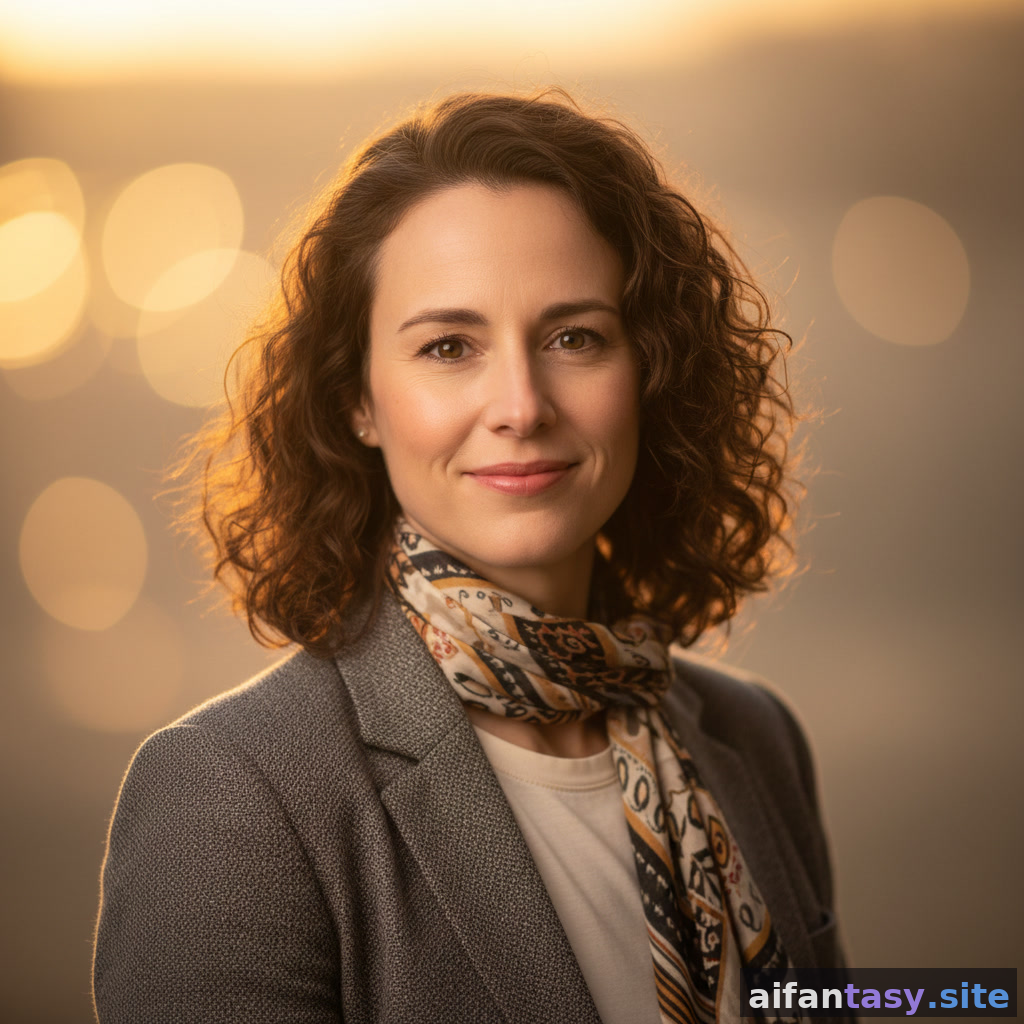
Editorial-grade composition for author bios, podcast covers, and feature articles.
StyleEditorial / Artistic
Use ForAuthor Bio, Podcast, Magazine
BackgroundSoft Bokeh
LightingWarm Creative
The creative AI portrait is for the moment when a corporate-style headshot would actively undersell what you do. It's built around soft bokeh, shallow depth of field, and warm creative lighting — the visual grammar of an indie book jacket, a literary magazine contributor page, or the cover image of a thoughtful podcast.
The composition intentionally avoids the studio flatness of a LinkedIn headshot. Background blur pulls focus to the subject; warm tones suggest a working creative rather than a polished executive. It's the portrait style that says "I make things" instead of "I run meetings," and that distinction matters when the bio sits next to a manuscript, an album, or an essay.
Use it for: author photos on the inside flap of a novel, podcast cover art and host bios, magazine contributor headshots, band or album "about the artist" sections, gallery artist statements, newsletter masthead portraits, and any other place where a thoughtful creative portrait would do more than a corporate headshot.
Author bios: Matches the visual register of a literary trade paperback jacket photo — soft, considered, atmospheric.
Podcast cover art and host bios: Holds up at both square (Apple Podcasts, Spotify) and rectangular (blog post, newsletter) crops.
Magazine contributor pages: Reads as editorial, not corporate — important when you're being featured for ideas, not your job title.
Newsletter masthead portraits: Pairs well with serif type and warm color palettes that have become standard for thoughtful newsletters.
Gallery or studio artist statements: Warm creative lighting reads as "making work," not "running a brand."
How to Customize This AI Portrait
The default creative portrait leans warm and atmospheric — soft bokeh in the background, gentle key light from the side, a thoughtful-but-approachable expression. If you want a different read, the prompt field accepts descriptions like "cooler tones, café background," "natural light, window light, soft smile," "richer color palette, editorial pose," or "moodier, dramatic shadows, neutral expression." Each variation preserves the editorial frame while shifting mood and palette.
For the strongest result, describe both the mood you want (warm, moody, bright, contemplative) and one or two background anchors (bookshelf, café, studio, garden). The generator uses those anchors to lock in a believable environment without making it the focus.
The creative portrait is intentionally built to survive context changes. The same image can sit next to a literary essay on a Sunday morning, on a podcast cover at thumbnail size, and inside a gallery catalog at full bleed — without looking like it was generated for a different use. That portability comes from the soft bokeh and the absence of harsh background detail: there is nothing in the image that pins it to a single context, which means it reads as "this is the artist" everywhere it appears.